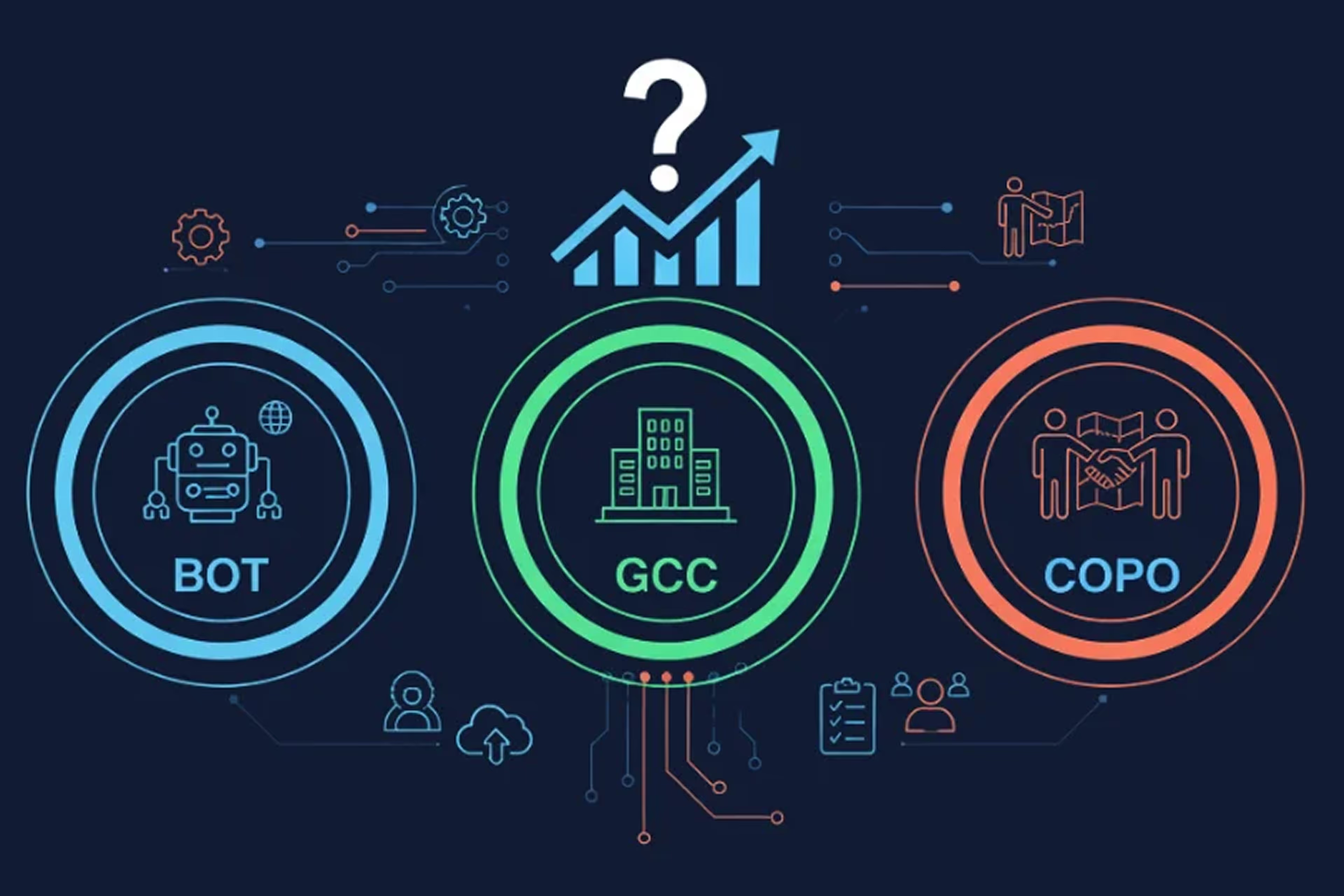
As global companies continue to expand their digital capabilities, scaling engineering teams has become a strategic priority. Offshore development models help organizations access global talent, reduce operational costs, and accelerate product development.
However, choosing the right offshore model can significantly impact long-term success. Three common offshore models used by enterprises are BOT (Build-Operate-Transfer), GCC (Global Capability Center), and COPO (Company-Owned, Partner-Operated).
Understanding the differences between these models helps organizations select the best approach for building scalable engineering teams.
Companies increasingly rely on offshore development centers to support rapid growth and digital transformation.
Offshore models offer several advantages:
Selecting the right offshore strategy ensures that businesses can scale efficiently while maintaining quality and operational control.
The Build-Operate-Transfer (BOT) model allows companies to establish an offshore development center with the support of a local partner.
The process typically follows three phases:
A partner company establishes the offshore team, infrastructure, and operational processes.
The partner manages the offshore operations while the client focuses on strategic oversight.
Ownership of the offshore center is gradually transferred to the client organization.
This model is ideal for companies planning to establish long-term offshore development operations.
A Global Capability Center (GCC) is a fully owned offshore development center operated directly by the parent organization.
GCCs typically handle:
Benefits of GCCs include full operational control and direct management of engineering teams. However, establishing a GCC requires significant upfront investment and operational planning.
The COPO (Company-Owned, Partner-Operated) model offers a hybrid approach between BOT and GCC.
In this model:
This allows organizations to retain ownership while benefiting from the operational expertise of an offshore partner.
COPO is particularly useful for companies that want strategic control but prefer to outsource day-to-day operations.
Understanding the differences between these offshore models helps organizations choose the best option based on their goals.
Each model offers unique advantages depending on business priorities and growth strategies.
Different organizations may benefit from different offshore strategies.
Selecting the right model depends on organizational goals, budget, and operational capabilities.
Offshore engineering centers continue to evolve as companies adopt new technologies and global collaboration models.
Key trends shaping offshore development include:
These trends are reshaping how organizations scale their engineering capabilities worldwide.
Before choosing an offshore model, organizations should evaluate several strategic factors.
Important considerations include:
A well-planned offshore strategy ensures sustainable growth and efficient engineering operations.
Scaling engineering teams globally requires more than just hiring developers in another location. It requires selecting the right operational model that aligns with the company’s long-term vision.
Whether adopting a BOT, GCC, or COPO model, organizations must evaluate their strategic priorities, operational capabilities, and growth plans.
By choosing the right offshore development model, businesses can build high-performing engineering teams that support innovation, scalability, and global expansion.
A strategic guide to migrating from Firebase to Supabase, focusing on cost optimization, open-source infrastructure, and data sovereignty.
Learn how combining Ruby on Rails for AI-driven frontends and Golang for high-throughput microservices creates a powerful hybrid architecture.
Explore how AI-driven personalization in Moodle enables adaptive learning paths and intelligent training experiences for modern enterprises.