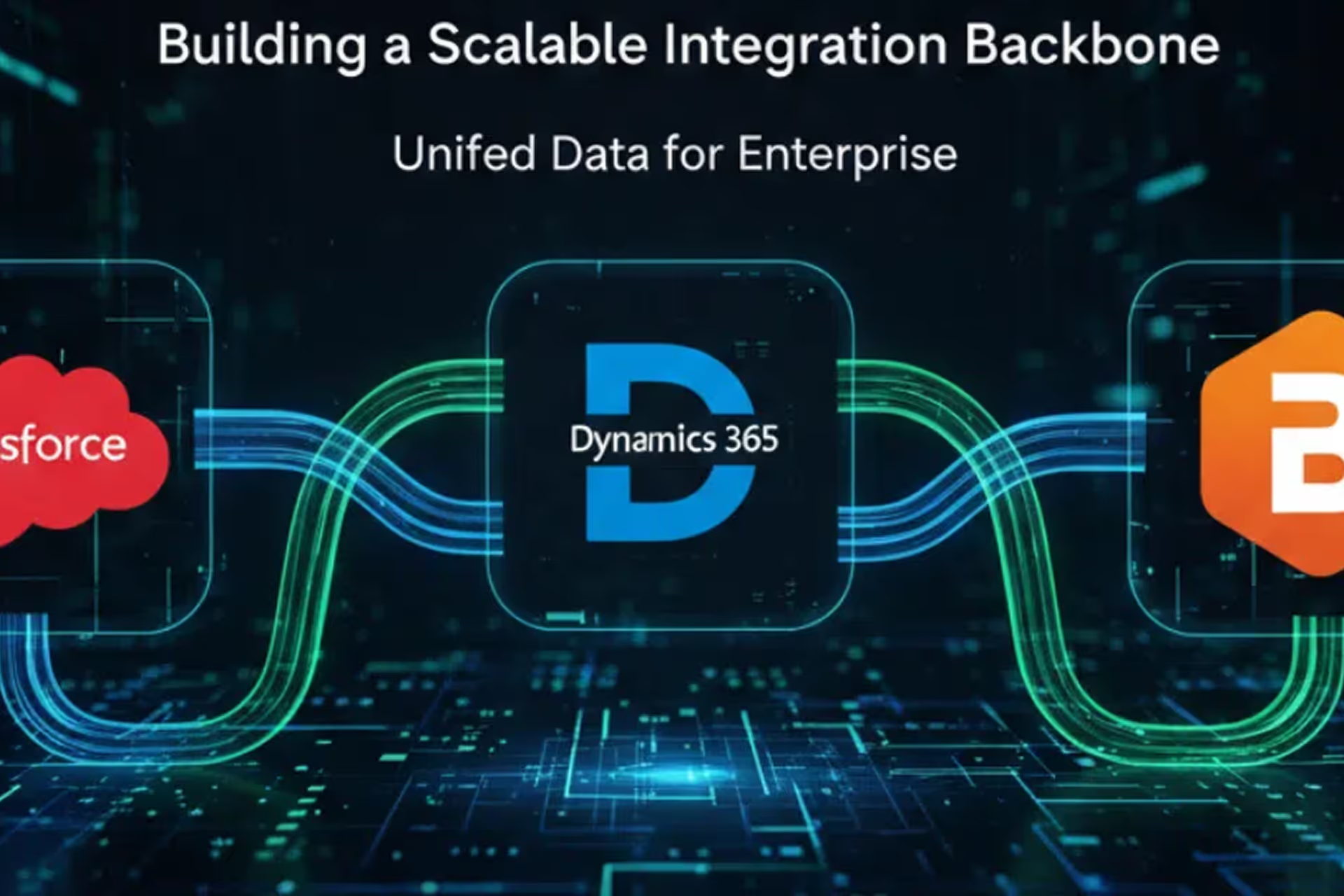
Modern enterprises rely on multiple systems to manage customer relationships, financial operations, and business workflows. Platforms such as Salesforce and Microsoft Dynamics CRM help companies manage customer data, while Boomi enables seamless integration between systems.
However, as organizations grow, integrating these platforms into a unified architecture becomes essential. Without proper integration, businesses struggle with fragmented data, inefficient workflows, and limited visibility into operations.
Building a scalable integration backbone allows enterprises to connect systems, automate processes, and maintain consistent data across platforms.
In today’s digital ecosystem, businesses operate across many different platforms including CRM systems, ERP tools, marketing automation platforms, and analytics tools.
When these systems operate in isolation, organizations experience:
A modern integration strategy ensures that business systems communicate seamlessly, enabling real-time data sharing and automation across the organization.
Many organizations use both Salesforce and Microsoft Dynamics CRM due to mergers, acquisitions, or different departmental requirements.
For example:
To maintain accurate customer data and streamline operations, these systems must remain synchronized.
Without integration, businesses risk duplicate records, inconsistent reporting, and operational inefficiencies.
Boomi provides a powerful integration platform that enables organizations to connect applications, data sources, and business processes.
Unlike simple connectors, Boomi acts as an integration backbone by offering:
Boomi allows organizations to create reusable integration processes that support complex enterprise workflows.
A modern integration architecture connects multiple enterprise systems through APIs, middleware, and automation frameworks.
Key architectural components include:
This architecture ensures reliable data synchronization across business platforms.
Enterprises commonly use integrations between Salesforce, Dynamics CRM, and other systems to automate business workflows.
Integration ensures that customer data remains synchronized between Salesforce and Dynamics CRM, creating a unified view of customer interactions.
Sales pipelines, orders, and billing data can flow automatically between CRM systems and financial platforms.
Customer service systems can trigger billing updates or subscription changes through integrated workflows.
Modern architectures allow systems to trigger actions based on real-time events such as new customer registrations or purchase transactions.
Enterprise integrations must prioritize security and regulatory compliance.
Key security considerations include:
By implementing governance frameworks, organizations can ensure integrations remain secure and compliant with industry regulations.
Organizations often encounter challenges when building integration architectures.
Common pitfalls include:
By designing integrations with scalability and resilience in mind, companies can avoid these issues.
MetaDesign Solutions specializes in building scalable enterprise integration architectures that connect complex systems.
Our integration capabilities include:
We help organizations create integration ecosystems that support scalable digital operations.
Enterprise integration is no longer a one-time project—it is an ongoing platform that supports digital transformation.
By building scalable integration architectures using platforms like Salesforce, Dynamics CRM, and Boomi, organizations can connect their systems, automate workflows, and unlock greater operational efficiency.
Businesses that invest in integration infrastructure position themselves to innovate faster, scale operations, and deliver better customer experiences.
A strategic guide to migrating from Firebase to Supabase, focusing on cost optimization, open-source infrastructure, and data sovereignty.
Learn how combining Ruby on Rails for AI-driven frontends and Golang for high-throughput microservices creates a powerful hybrid architecture.
Explore how AI-driven personalization in Moodle enables adaptive learning paths and intelligent training experiences for modern enterprises.